

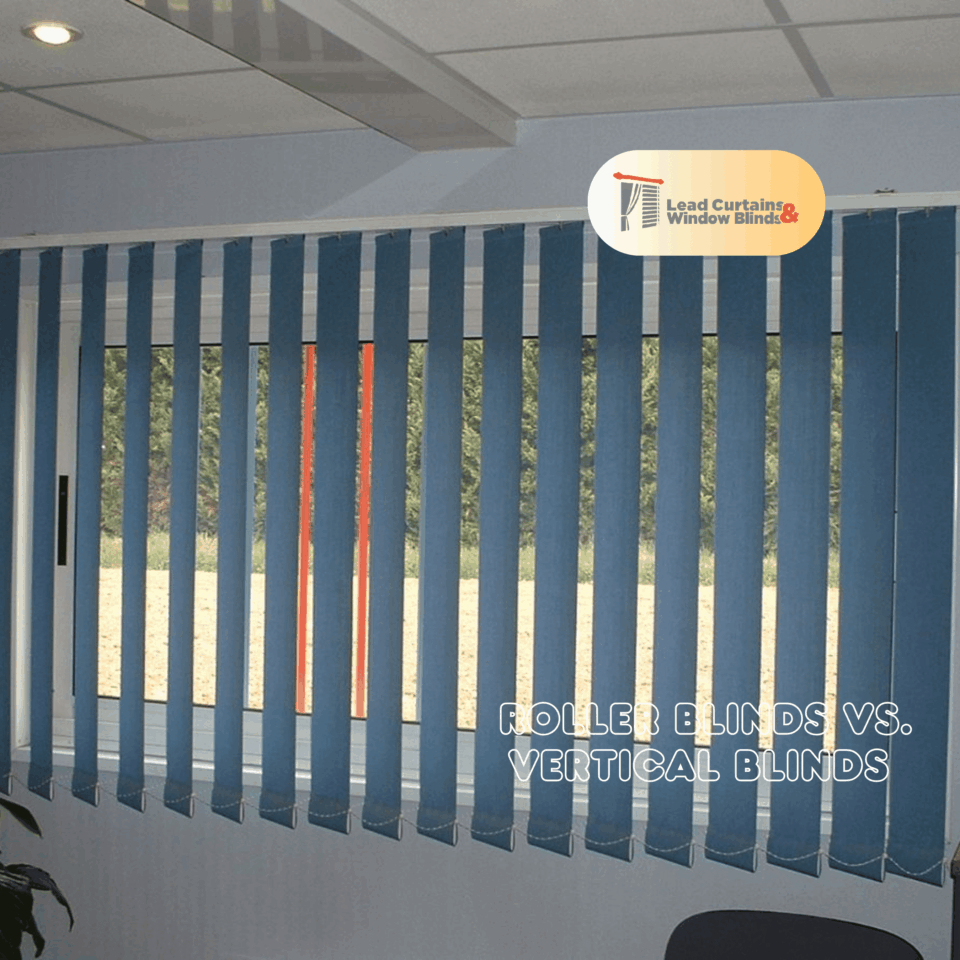
Window treatments affect the look and function of any room. Vertical blinds vs. Roller blinds are popular options, each with pros and cons. This essay compares them and highlights why Lead Curtains and Blinds are the best supplier.
Light Control and Privacy: A Key Consideration
One of the primary functions of window blinds is to control the amount of light in a room and to provide privacy. When comparing vertical blinds vs. roller blinds on this basis, vertical blinds are very versatile. Their twisting slats allow one to have both light and privacy control, as it is possible to filter light without completely blocking it. This renders them well suited to offices where they need to minimize glare, or residences where they require ambient light even when there is a need for privacy. Roller blinds, by contrast, present a more binary solution. Either they are open, in which case they permit maximum light, or else they are closed, and there is total privacy. Some roller blinds have different opacities, so there is a measure of flexibility in the control of light.
Could AI automate blind adjustment based on real-time sunlight analysis to optimize energy efficiency and comfort?
Indeed, AI can automate blind adjustments by tracking sunlight and indoor conditions. It uses sensors and predictive models to reduce glare, maintain natural light, and save energy. Machine learning helps adapt to changes over time for personalized comfort.
Aesthetic Appeal and Design Versatility
The aesthetics of window treatments are also a significant factor. Roller blinds vs. vertical blinds create a distinctly different look. Vertical blinds provide a more formal, structured look and are a common choice in office environments. Their clean lines and vertical position can also create an illusion of height, which is quite effective in rooms with shorter ceilings. Roller blinds, however, are available in a very wide color, pattern, and material range, offering greater design versatility. They can be made to suit any one of several interior design schemes, from minimalist to contemporary. The sleek and streamlined appearance of roller blinds makes them extremely popular with modern homes that want a clutter-free and clean appearance.
Durability and Maintenance: Longevity Matters
Durability and low maintenance are essential, particularly in high-traffic areas like offices and family homes. Comparing vertical blinds vs. roller blinds on these aspects, both offer mediocre durability but with varying weak points. Vertical blinds are more likely to have damage to a single slat because they are an individual entity. However, it is typically simple to replace a single damaged slat. Roller blinds, with a single piece of material or fabric, are less prone to minor damage. However, the entire blind would need to be replaced in case of the material tearing or the roller system malfunctioning. They are both very simple to clean as far as maintenance goes. Vertical blinds are wipeable or dustable, while roller blinds are damp cloth cleanable.
Cost-Effectiveness: Balancing Price and Value
Price always matters when it comes to making a purchase. In pitting vertical blinds and roller blinds against each other in cost-effectiveness, one must consider both the initial cost of the purchase and the maintenance cost in the long run. Vertical blinds are cheaper than roller blinds, especially for big windows. Their simpler design and construction are partially accountable for this reduced price. Roller blinds, particularly with higher-tech fabrics or motorized operation, can be a larger up-front investment. Their longevity and low maintenance, however, can make them a cost-effective choice in the long run.
suitability for Different Spaces: Office vs. Home
The ideal choice of roller blinds vs. vertical blinds tends to boil down to the room in which they’re to be installed. In terms of offices, vertical blinds tend to be the preferred choice due to their professional appearance, practical light control, and affordability. Their glare reduction and light-filtering abilities render them an excellent choice for offices where computer screens are everywhere. For homes, roller blinds also offer greater design potential, and homeowners can choose colors and patterns that will complement their internal décor. They are best suited for bedrooms, living rooms, and kitchens. Having said that, there are no hard and fast rules, and personal preference should always be high on the agenda.
Installation and Operation: Ease of Use
Ease of installation and operation is another essential consideration. Vertical blinds vs. roller blinds both have relatively straightforward installation processes, but the specifics differ. Vertical blinds typically mean putting in a headrail and adding the individual slats. Roller blinds mean putting in a bracket and attaching the roller mechanism. Either can be do-it-yourself projects for people with some handiness, but professional installation is always the ideal option for best performance.
Operation
You control vertical blinds with a wand or cord to turn the slats when in use, while you raise or lower roller blinds through a cord, chain, or motorized system.
Special Features and Innovations
Recent designs have created special features that enhance the usability of both vertical blinds vs. roller blinds. For instance, you can control motorized vertical blinds remotely, making them particularly convenient for tall windows or hard-to-reach areas. You can also integrate motorized roller blinds with smart home systems to enable automatic control by time of day or light levels. Blackout roller blinds are also available, providing complete light blockage for bedrooms or home theaters. That these additional features are on offer adds yet another layer of decision-making complexity, requiring careful consideration to align individual needs and preferences.
Conclusion
Choosing between vertical blinds and roller blinds involves factors like light control, personal preference, budget, and the setting’s specific needs. Vertical blinds are good for offices, while roller blinds are more versatile for homes. Having said that, however, the decision should ultimately be made after careful deliberation of individual needs and priorities. For quality service and second-to-none advice, the answer to all your solutions is with Lead Curtains and Blinds. Therefore, for expert recommendation and professional installation services of the most appropriate window coverings for your office or home, contact Lead Curtains and Blinds today. Let us help you provide your premises with a total makeover with the perfect blinds.
