

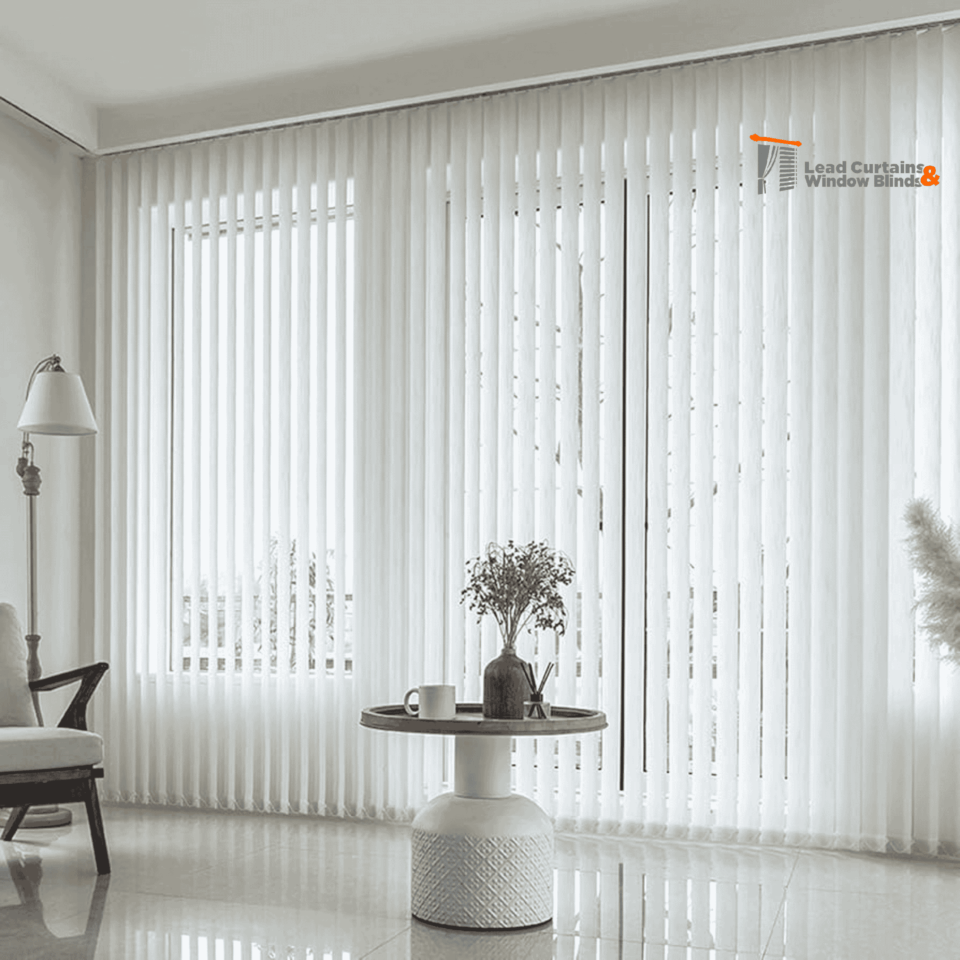
Vertical Blinds for Oversized Windows provide a practical solution for regulating light, ensuring privacy, and enhancing aesthetic appeal in oversized commercial rooms. While their horizontal counterpart offers less filtration control over the light, vertical blinds suit large glass areas better. This paper explores how to optimize vertical blinds for large windows in commercial settings, focusing on durability, light control, and design consistency.
Understanding the Scale: Matching Slat Sizes to Window Dimensions for Vertical Blinds for Large Windows
The aesthetic impact and functionality of Vertical Blinds for Large Windows largely depend on the slat size you select. Designers typically employ larger slats (typically 3.5 inches or larger) where large window sizes are involved. These larger slats create a more dramatic, more proportional look that complements the size of the windows, without causing the blinds to appear overly busy and disjointed. Moreover, wider slats enhance light control by minimizing openings between slats when closed. Conversely, narrower slats might suit thinner or shorter commercial windows to offer a balanced appearance. Professional guidance is crucial for determining the optimal slat width for specific window sizes, taking into account viewing angles and required light levels.
Material Selection: Balancing Durability, Aesthetics, and Functionality for Vertical Blinds on Big Windows
The vertical blind material you choose for Large Windows greatly affects their durability, maintenance, and functionality. Heavy-duty materials such as aluminum or PVC work well in busy commercial spaces. PVC resists water, warping, and fading, making it ideal for spaces where humidity levels change. Aluminum slats resist wear and can endure repetitive use, making them a great choice for heavy-duty commercial spaces.
Fabric options, including polyester or fiberglass, provide a softer look and better insulation. They work best for conference rooms or office rooms where a more refined look is required. However, fabric slats can require higher maintenance and may be less durable than PVC or aluminum in rougher applications. The opacity of the fabric further impacts light control, with blackout options available for areas requiring total darkness, such as presentation rooms.
Light Control and Privacy: Refining the Versatility of Vertical Blinds for Large Windows
Maximum light control and privacy drive design choices in business settings. Vertical Blinds for oversized Windows excel at managing the amount of natural light that enters a space, keeping glare minimized and heat gain at a minimum. This can result in huge energy savings by lowering the need for artificial light and air conditioning.
Adjustable slat angles allow you to control light, while opaque finishes and tight slat closures provide visual security in privacy-conscious spaces like executive offices or conference rooms. Where light is desired but privacy is not completely sacrificed, you can use translucent finishes. Automation systems can further enhance light control, allowing for programmable adjustments based on time of day or occupancy.
Acoustic Considerations: Damping Sound with Vertical Blinds for Large Windows
In open office areas, acoustics play a crucial role in maintaining employee comfort and performance. You can utilize Vertical Blinds for oversized Windows to dissipate sound, particularly when the blinds’ material is fabric. The texture and weight of fabric slats diffuse sound reverberation and reduce noise and echo levels in the room.
Vertical blinds enhance acoustic benefits when combined with sound-absorbing panels or carpet, and their fabric type and slat design contribute to a productive working environment.
Design Coherence: Merging Vertical Blinds for Large Windows into the Commercial Space
You must ensure that the visual integration of Vertical Blinds for Large Windows aligns with the overall architecture of the building. Blinds should complement the existing décor, color scheme, and the architecture of the building. Tonal colors such as white, gray, or beige are versatile and can easily fit in most environments. To make a bold statement, you can create blinds in company colors or a pattern to support the company image.
You must also consider the operating systems and headrail. Clean, sleek designs often appeal in new commercial buildings, but more traditional spaces can benefit from decorative headrails. Motorized styles create a cable- and wand-free, minimalist look while enhancing ease of use.
Installation and Maintenance: Providing Durability to Vertical Blinds for Large Windows
Incorrect installation is paramount to the functioning and longevity of Vertical Blinds for oversized Windows. Professional installation ensures that the blinds mount securely, operate smoothly, and align properly. Regular upkeep through dusting and cleaning further optimizes the longevity of the blinds.
Depending on the material, cleaning processes may vary. You can generally wipe PVC and aluminum slats off with a damp cloth, but you may need to vacuum or professionally clean fabric slats. Repairing issues right away, such as broken slats or mechanisms, prevents further damage and ensures continued functionality.
Conclusion
Vertical Blinds for big Windows provide an influential solution for light control, privacy, and overall aesthetic effect in gigantic business spaces. To optimize window treatments, companies should carefully select and install Blinds for big Windows, considering factors like slat sizes, material, light control, acoustics, design consistency, and installation methods. Call us today at Lead Curtains, and turn your large windows into assets of efficiency and style.
